
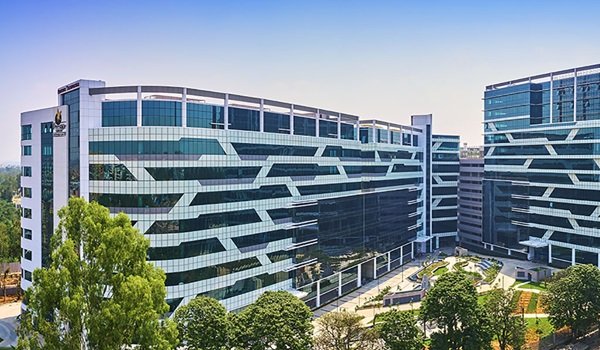
Bangalore’s identity as India’s technology capital is well established, but the geography of that technology ecosystem is shifting. For decades, the city’s IT employment was concentrated in corridors like Whitefield, Electronic City and the Outer Ring Road belt. Today, the North Bangalore corridor — anchored by Devanahalli Business Park, the airport zone commercial ecosystem and the growing cluster of corporate campuses near Kempegowda International Airport — is emerging as the next major axis of technology-driven employment growth. This article examines how IT corridor expansion driving apartment demand Sadahalli is creating a structural shift in residential demand patterns that directly benefits property buyers in the Sadahalli micro-market.
Devanahalli Business Park — The Northern Employment Anchor
The Devanahalli Business Park effect on housing is the most tangible and immediate manifestation of IT corridor expansion in the northern zone. Located approximately 11 kilometres from Sadahalli, the business park has progressively attracted corporate tenants across IT services, consulting, financial services and business process operations.
The business park’s growth trajectory has followed the classic pattern observed at Bangalore’s earlier IT hubs — initial anchor tenants attract supporting service businesses, which attract additional corporate tenants, which generates a critical mass of employment that in turn drives residential demand in surrounding localities. Manyata Tech Park in Hebbal and ITPL in Whitefield both followed this pattern, and in each case, residential property values in surrounding areas appreciated significantly as the employment base grew.
For Sadahalli, the proximity to Devanahalli Business Park creates a direct and growing demand pipeline for residential properties. Professionals working at the business park represent one of the largest identifiable tenant and buyer segments for apartments in the Sadahalli corridor, and as the park continues to expand, this demand is expected to intensify.
Amazon Office at Sattva Horizon — A Major Demand Signal
The Amazon office Sattva Horizon impact residential demand in the North Bangalore corridor deserves specific attention because of the scale and profile of the employer involved. Amazon’s presence in a commercial development approximately 11 kilometres from Sadahalli signals that one of the world’s largest technology companies has identified the North Bangalore corridor as a strategic location for its operations.
When a company of Amazon’s scale establishes an office in a particular zone, it creates multiple layers of residential demand. Direct employees who relocate to work at the office need housing. Supporting service providers — catering, logistics, security, maintenance — establish operations nearby. Other technology companies observe the location choice and consider establishing their own presence in the same corridor, creating a clustering effect that progressively builds the employment base.
For residential property buyers, the Amazon signal is important not just for the direct housing demand it generates but for what it indicates about the corridor’s trajectory. Major technology companies invest enormous resources in location selection, evaluating infrastructure quality, talent availability, connectivity and future development potential before committing to a new campus. Amazon’s choice of the North Bangalore corridor validates the area’s fundamentals in a way that benefits all residential investments in the surrounding micro-markets.
Tech Employment and Apartment Demand in North Bangalore
The broader pattern of tech employment apartment demand North Bangalore extends beyond individual employers to reflect a structural shift in where Bangalore’s technology workforce wants to live and work.
For years, the standard pattern was for IT employees to live in areas like Whitefield, Marathahalli or Sarjapur and commute to offices in those same corridors. The North Bangalore corridor disrupts this pattern by offering a new employment-residential equation — one where professionals can work in a modern commercial zone near the airport and live in a green, low-density residential environment nearby, with commute times measured in minutes rather than hours.
This proposition is increasingly attractive to Bangalore’s technology workforce, particularly mid-career and senior professionals who have accumulated wealth, started families and developed lifestyle preferences that favour space, air quality and tranquility over the dense urban environments of traditional IT corridors. These are precisely the buyers and tenants who drive demand for luxury apartments in localities like Sadahalli.
The remote and hybrid work revolution has further amplified this trend. Professionals who work from home two to three days per week are less constrained by daily commute considerations and more responsive to living environment quality. For these buyers, a 40-minute commute to Manyata Tech Park is acceptable when balanced against living in a 70-acre township with 65 percent open spaces and 15-minute airport access. For a detailed assessment of commute times from Sadahalli to major IT hubs, read our commute guide.
The Self-Reinforcing Cycle of IT Growth and Residential Demand
The relationship between IT corridor expansion and residential demand operates as a self-reinforcing cycle. As more companies establish offices in the North Bangalore corridor, more professionals need housing in the area. As more professionals move to the area, the consumer market grows, attracting retail, dining, healthcare and educational services. As the social infrastructure improves, the area becomes more attractive to both employers and employees, drawing additional companies and talent into the zone.
This cycle is already visible in the Devanahalli-Sadahalli corridor. The growth of Devanahalli Business Park has attracted residential development. Residential development has attracted schools and healthcare facilities. These amenities have made the area more livable, which in turn makes it easier for employers to recruit talent to the zone. The result is a progressively maturing ecosystem where each component reinforces the others.
For investors, this self-reinforcing dynamic is significant because it provides structural resilience. Unlike markets driven by a single demand factor that can be disrupted, the multi-layered demand ecosystem in the North Bangalore corridor — IT employment, aerospace employment, airport-related employment, NRI demand, investor demand — creates a diversified foundation that supports property values even if any individual component slows temporarily.
What IT Corridor Growth Means for Lodha Sadahalli Buyers
For buyers evaluating Lodha Sadahalli, the IT corridor expansion driving apartment demand Sadahalli represents a fundamental demand driver that supports both rental income and capital appreciation over the medium to long term.
The project’s location — approximately 11 kilometres from Devanahalli Business Park and the Amazon Sattva Horizon complex, and approximately 15 kilometres from the KIADB Aerospace SEZ — places it within the primary residential catchment zone for North Bangalore’s expanding technology workforce. As this workforce grows, the demand for premium residential properties within practical commuting distance will intensify, supporting both property values and rental rates.
For an analysis of how this employment-driven demand translates into measurable capital appreciation, read our article on capital appreciation trends in Sadahalli. For the broader economic context, explore our guide on the Bangalore IT ecosystem and its impact on residential demand.
To discuss how IT corridor growth supports your investment thesis at Lodha Sadahalli, connect with our advisory team. Visit the location page for proximity details to major employment hubs.