
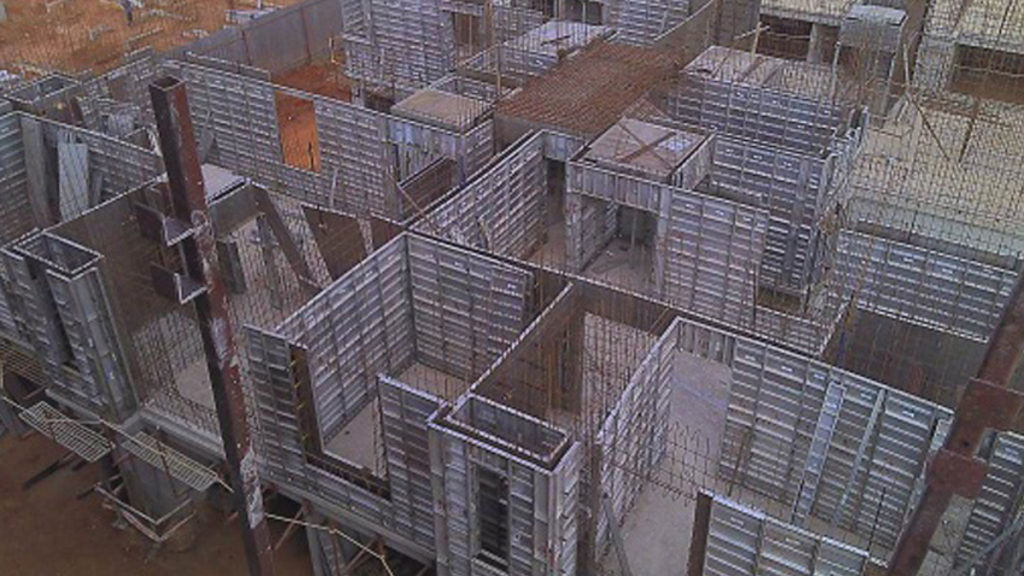
Construction technology is not a topic that typically excites home buyers, yet it is arguably the most consequential technical decision a developer makes. The choice between construction methods determines the structural strength of your building, the dimensional precision of your walls, the quality of your surface finishes, the speed at which your home is built and the long-term maintenance profile of the entire development. This article explains why Lodha uses Mivan construction technology advantages at Lodha Sadahalli and across their project portfolio, and how this choice directly benefits apartment buyers.
What Is Mivan Technology and How Does It Differ from Conventional Construction?
The Mivan vs conventional construction comparison begins with understanding the fundamental differences in methodology.
Conventional construction — used in the vast majority of residential projects across India — involves building walls using bricks or blocks that are individually laid and then covered with a plaster coat to create a smooth surface. This method is labour-intensive, time-consuming and heavily dependent on the skill of individual masons. The quality of the finished wall varies based on the craftsmanship of whoever happens to be working on that particular section, which means that wall straightness, surface smoothness and dimensional accuracy can vary not just between floors but between adjacent rooms.
Mivan construction replaces this manual brick-and-plaster approach with precision-engineered aluminium formwork panels. These panels are assembled on site to create moulds for walls, columns and slabs, and then concrete is poured into the moulds to form the structural elements in a single integrated operation. When the formwork is removed, the walls emerge with a smooth, dimensionally precise surface that requires minimal additional finishing.
The difference is analogous to the difference between hand-sculpting a product and manufacturing it using precision moulds. Both can produce acceptable results, but the moulded approach delivers consistency, accuracy and repeatability that hand methods cannot match at scale.
Mivan Formwork Benefits for High Rise Residential Buildings
The Mivan formwork benefits high rise residential buildings are particularly pronounced because the technology’s advantages compound with scale.
In a conventional high-rise building, maintaining quality consistency across seventeen or eighteen floors is a persistent challenge. Different teams work on different floors, using different batches of materials with different skill levels. The cumulative effect of these variables can produce noticeable quality differences between floors — something that is both functionally problematic and commercially damaging when buyers compare units.
Mivan technology eliminates most of these variables. The same aluminium formwork panels are used on every floor, producing walls of identical thickness, identical surface quality and identical dimensional accuracy from the ground floor to the top. The result is a building where every apartment on every floor meets the same quality standard — a consistency that is visible in the straightness of walls, the precision of corners and the smoothness of surfaces.
For Lodha Sadahalli’s two towers — G+17 and G+18 — this consistency means that a buyer on the fifth floor and a buyer on the fifteenth floor receive apartments of identical structural and finish quality. The floor premium reflects the view and status of the higher floor, not a quality difference in the apartment itself.
Mivan Earthquake Resistance for Luxury Apartments
One of the most significant technical advantages of Mivan construction is the monolithic structural system it creates. Because walls, slabs and columns are cast together in a single pour, the resulting structure behaves as a unified whole rather than an assembly of separate components joined together.
This monolithic behaviour provides superior Mivan earthquake resistance luxury apartments performance compared to conventional brick-wall structures. In a conventional building, the bricks and plaster are non-structural elements attached to a separate reinforced concrete frame. During seismic events, these non-structural elements can separate from the frame, causing cracks, falling plaster and in severe cases, partial wall collapse.
In a Mivan-constructed building, the walls are the structure. They are reinforced concrete members that resist lateral seismic forces as part of the building’s overall structural system. This integrated response means that Mivan buildings distribute seismic forces more evenly across the structure, reducing the concentration of stress at any single point and providing substantially better performance during earthquakes.
While Bangalore is classified in Seismic Zone II — a moderate-risk zone — the history of unexpected seismic activity in previously quiet regions makes earthquake resistance a prudent consideration for any building designed to last fifty years or more. The structural investment in Mivan technology provides safety assurance that extends across the building’s entire lifespan.
Speed — The Timeline Advantage
Beyond quality and safety, Mivan technology delivers a significant construction speed advantage. A typical floor cycle — the time required to complete one full floor of the building — takes approximately seven to ten days with Mivan technology, compared to twenty to thirty days with conventional construction.
For a G+17 or G+18 tower, this speed difference translates into a superstructure completion timeline that is roughly 50 to 60 percent shorter than conventional methods. Faster construction means earlier possession for buyers, a shorter period during which capital is locked in an incomplete asset, and reduced exposure to the cost escalation risks that accompany prolonged construction timelines.
The speed advantage also reduces the project’s vulnerability to external disruptions. A shorter construction timeline means fewer monsoon seasons to navigate, fewer potential supply chain disruptions and a shorter window during which unforeseen events can affect progress.
Acoustic and Thermal Performance
The daily living benefits of Mivan construction extend into comfort dimensions that buyers experience but may not initially attribute to construction technology. The solid reinforced concrete walls produced by Mivan formwork provide superior sound insulation compared to conventional brick walls. This means less noise transmission between adjacent apartments, between floors and from common areas — a particularly valuable quality in a residential building where privacy and tranquility are essential to the luxury living experience.
The thermal mass of concrete walls also provides natural temperature regulation. Concrete absorbs heat during warm periods and releases it during cool periods, moderating the internal temperature and reducing air conditioning dependence during moderate weather. Over years of occupancy, this passive thermal regulation translates into measurable energy savings and a more comfortable living environment.
Why Lodha Specifically Chooses Mivan for Their Projects
The why Lodha uses Mivan construction technology advantages question has a strategic answer that goes beyond the technical benefits. Mivan construction requires significant capital investment in the aluminium formwork systems, specialised construction management and trained labour teams. Not every developer is willing or able to make this investment.
The Lodha Group has standardised on Mivan technology across much of their portfolio because they view the upfront investment as justified by the superior quality outcomes, faster construction timelines and lower long-term defect rates that Mivan delivers. Their extensive experience with the technology across multiple projects in multiple cities means that execution risks are well understood and mitigated through established processes.
For Lodha Sadahalli buyers, this means the Mivan construction at their project is not an experiment — it is the application of a proven methodology by a team with deep practical experience. For the project-specific construction approach, read our Lodha Sadahalli Mivan construction update. For the broader quality standards framework, explore our article on Lodha construction quality standards.
To discuss how Mivan construction at Lodha Sadahalli benefits your apartment specifically, connect with our advisory team. Visit the specifications page for material and construction details.